Fertility & Cycle Health Ultrasound Scans
Price From – £89
These specialist ultrasound scans are designed to assess specific aspects of female reproductive health and cycle monitoring. They are particularly useful for women experiencing irregular cycles, fertility difficulties, or undergoing assisted conception treatment such as IVF.
At Serenity Ultrasound, we provide 3 tailored services:
OUR SERVICE
What This Service Includes
Every fertility and cycle health scan appointment includes:
- Detailed ultrasound assessment tailored to your specific scan type (PCOS, follicle tracking, or endometrial lining)
- Digital and printed report provided on the same day
- Digital images available securely to download for your own records
- Option to forward your report and images to your fertility clinic or gynecologist, with your consent
- Discussion of findings with recommendations for onward referral if required
- Pre-book subsequent scans in clinic — evening and weekend options subject to availability
Tailored Care
All fertility and cycle health scans can be tailored to your individual needs. We are happy to adapt scan timing and focus after consideration and discussion with your gynecology team or fertility clinic if appropriate.
Contact us for more information or to discuss your individual requirements.
View Scan & Blood Test PackagesWho Should Have These Scans?
Who Should Have a PCOS Scan?
- Women experiencing irregular or absent periods
- Those with symptoms such as acne, excess hair growth, or difficulty conceiving
- Anyone advised by their GP or fertility specialist to check for PCOS
Who Should Have Endometrial Lining Scans?
- Women preparing for IVF or embryo transfer
- Those with a history of implantation failure
- Women concerned about irregular cycles, abnormal bleeding, or menstrual problems
Who Should Have Follicle Tracking Scans?
- Women trying to conceive naturally and wanting reassurance about ovulation
- Couples timing intercourse to maximise chances of pregnancy
- Women undergoing fertility treatment (IVF, IUI, ovulation induction)
- Those with irregular cycles who want clarity about follicle development and ovulation
How Are These Scans Performed?
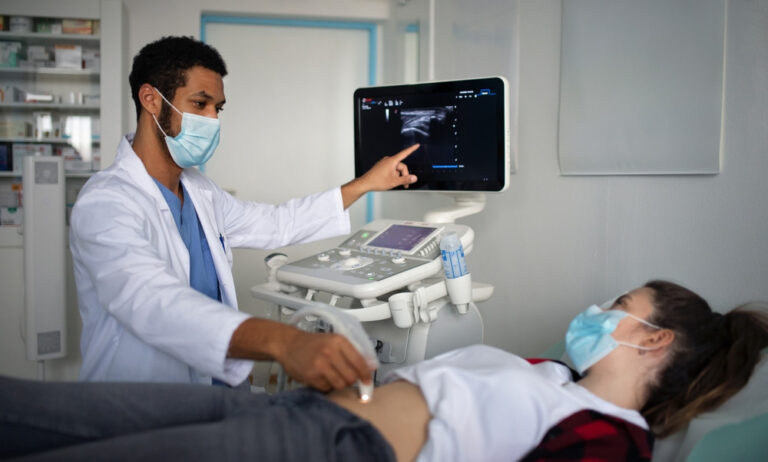
Pelvic ultrasound assessment for fertility and cycle health is primarily performed using a trans-vaginal ultrasound scan (TVS), as this provides the most detailed and accurate evaluation of the uterus, endometrium, and ovaries.
During the examination, a small ultrasound probe is gently inserted into the vagina to obtain high-resolution images of pelvic structures. This examination is only performed with your consent.
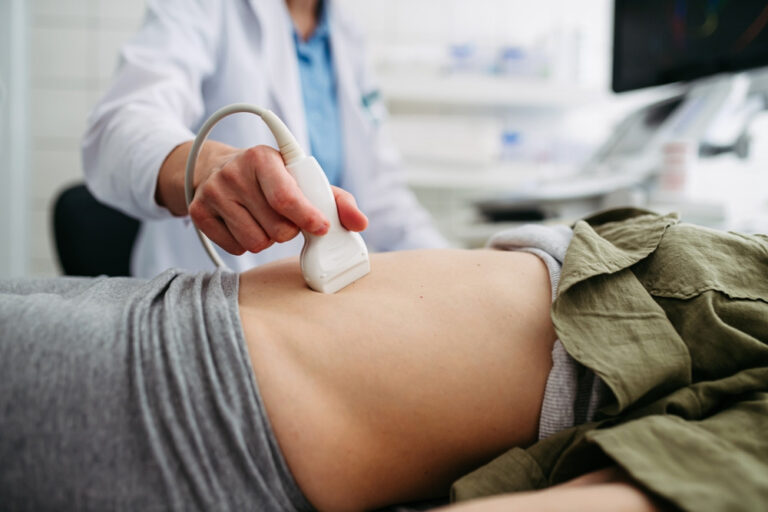
A trans-abdominal scan is also performed as part of the assessment for completeness, providing an overview of the pelvis and allowing correlation of findings across both imaging approaches. This combined technique ensures a comprehensive and thorough evaluation.
** IMPORTANT INFORMATION **
Trans-vaginal ultrasound provides a significantly clearer view of pelvic organs compared with abdominal scanning alone and is particularly valuable in fertility assessment, where subtle anatomical or cycle-related changes may influence conception.
Specific Scan Schedule / Timings
When Can a PCOS Scan be Performed?
If your menstrual cycles are irregular or absent, the scan can usually be performed at any time, provided pregnancy has been excluded. Our sonographers will take your menstrual history into account when interpreting your results.
It is important to note that ultrasound findings alone do not diagnose PCOS. Diagnosis is based on a combination of ultrasound appearance, menstrual history, symptoms, and, where appropriate, hormone blood tests in line with recognised clinical guidelines.
We offer a combined PCOS Scan and Blood Test Package for a thorough evaluation.
Timings for Endometrial Lining Scans
The timing of your scan is critical for accuracy:
- Days 1-5 (early cycle): Baseline scan for IVF or fertility treatments, showing a thin lining (<5mm)
- Days 5-10 (just after menstruation): Best for general gynecological assessment, as the lining is thinnest and abnormalities are most visible
- Days 12-16 (mid-cycle): Fertility monitoring, assessing follicle growth alongside endometrial thickness
- Days 21-28 (luteal phase): Lining is at its thickest, useful for confirming implantation readiness or investigating conditions like hyperplasia
If you or your fertility team require a bespoke schedule within your typical cycle length, this may also be accommodated.
Typical Scan Schedule for Follicle Tracking
The follicle tracking package includes three scans in a natural cycle:
- Day 9-10: Baseline scan to identify early follicle development and measure endometrial thickness
- Day 11-12: Mid-cycle scan to assess follicle growth and track the developing dominant follicle
- Day 13-14: Pre-ovulation scan to confirm follicle maturity, estimate ovulation, and check endometrial development
If you or your fertility team require a bespoke schedule within your typical cycle length, this may also be accommodated.
Why Is Ultrasound Useful in Fertility Assessment?
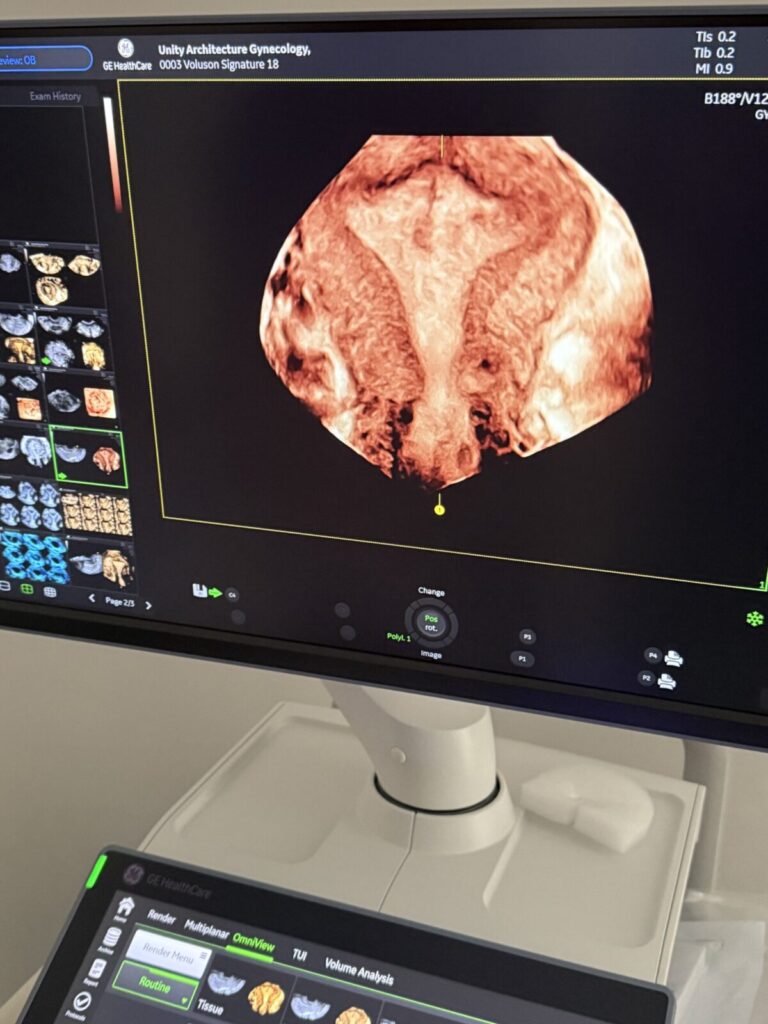
Successful conception relies on the interaction between egg development, ovulation timing, and endometrial preparation. Ultrasound assessment allows these stages to be visualised together, providing valuable insight into reproductive health and supporting informed fertility planning.
Follicle Development and Ovulation
Within the ovaries, eggs develop inside small fluid-filled structures called follicles. On ultrasound, follicles appear as round, dark (fluid-filled) areas which increase in size as ovulation approaches. By monitoring follicle growth, ultrasound can:
- Identify the dominant follicle
- Measure follicle size and development
- Help predict when ovulation is likely to occur
- Confirm changes following ovulation
Endometrial (Uterine Lining) Assessment
The endometrium is the lining of the uterus where implantation occurs following fertilisation. Ultrasound allows assessment of both the thickness and appearance of the lining throughout the cycle. Assessment of the endometrium helps evaluate:
- Cycle timing and hormonal response
- Endometrial thickness and structure
- Implantation readiness
- Possible abnormalities affecting the uterine cavity
Ovarian Appearance and Cycle Health
Ultrasound also enables detailed assessment of overall ovarian morphology, including ovarian size and the number of small resting follicles present. This evaluation can help investigate irregular menstrual cycles, ovulatory dysfunction, or features suggestive of polycystic ovarian morphology.
OUR PROCESS
Frequently Asked Questions

Before Your Appointment
Drink 1-2 pints of water before your appointment to ensure a full bladder. Wear comfortable, loose-fitting clothing and bring any relevant medical history or previous scan reports to share with your sonographer.

During Your Appointment
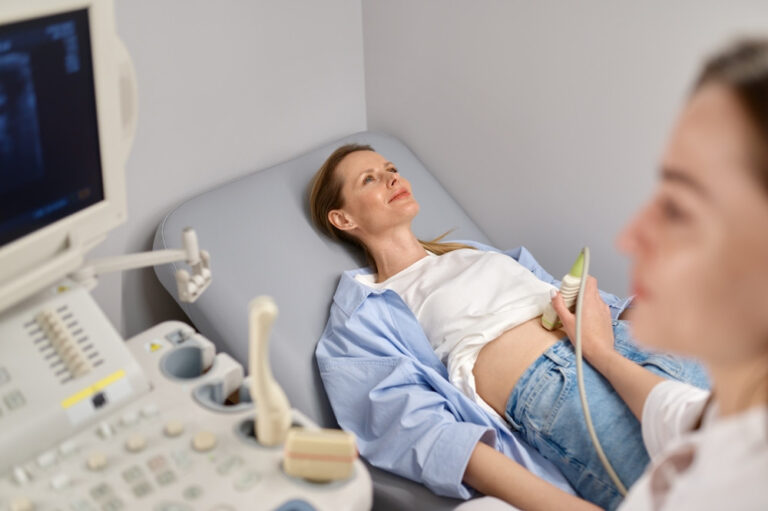
Your sonographer will perform a trans-vaginal and trans-abdominal scan, explaining each step as they go. The appointment typically takes 20-30 minutes and is carried out in a calm, private, and professional environment.

After Your Appointment
You will receive a same-day digital and printed report with clear findings. Your sonographer will explain the results and advise on next steps. You can share your report directly with your GP, fertility clinic, or gynecologist.
Important Disclaimer
Fertility and cycle health scans provide valuable information but do not replace a full fertility assessment. They cannot guarantee pregnancy or diagnose every underlying cause of subfertility.
We recommend you share your report with your GP, fertility specialist, or gynecologist for ongoing care and treatment planning.
RELATED SERVICES
Other Women’s Scans You May Find Helpful
Many patients booking a women’s ultrasound also explore additional scans depending on symptoms, cycle health, or fertility goals. These services are designed to provide clarity, reassurance, and a fuller picture of your reproductive and pelvic health.